
Glove Buying Guides
How to Choose the Right Gloves for Your Team, Facility, or Industry
Choosing the right glove starts with the task. Compare glove type, material, sterility, thickness, texture, cuff length, and sizing, then review the product specifications before ordering.
MedGluv helps professional buyers compare glove categories clearly, from routine non-sterile exam gloves to sterile exam gloves and surgical gloves. Whether you are buying for a healthcare facility, dental office, laboratory, veterinary practice, beauty business, food operation, correctional team, or high-volume organization, this guide can help simplify the decision.
Use this page as a practical starting point, then review each product's specifications before ordering.

First, Choose the Right Glove Category
Before comparing materials or pricing, start with the glove category. A routine cleaning task, patient exam, sterile clinical task, and surgical procedure can each call for a different type of glove. MedGluv organizes glove products into clear categories so buyers can quickly move toward the right option.
Non-Sterile Exam Gloves
Used for routine professional tasks where disposable barrier protection is needed but sterile protection is not required.
Sterile Exam Gloves
Used for appropriate clinical, dental, laboratory, and specialty care tasks where sterile barrier protection is required.
Surgical Gloves
Designed for surgical use where the product is specifically intended and labeled for surgical applications.
Exam Gloves vs. Surgical Gloves
Exam gloves and surgical gloves are not the same category. Exam gloves may be non-sterile or sterile depending on the product and intended use. Surgical gloves are specifically designed for surgical applications. Buyers should select based on the task, facility protocol, and product labeling.
| Glove Type | Common Use | Key Buying Consideration | Shop |
|---|---|---|---|
| Non-Sterile Exam Gloves | Routine exams, cleaning, handling, food service, beauty, lab, janitorial, and general professional tasks. | Material, fit, durability, texture, size range, and ordering volume. | View Collection |
| Sterile Exam Gloves | Appropriate clinical, dental, laboratory, or specialty care tasks requiring sterile barrier protection. | Material, sterile packaging, intended use, fit, cuff, and facility protocol. | View Collection |
| Surgical Gloves | Surgical procedures and surgical environments where sterile surgical gloves are required. | Surgical labeling, material, fit, sizing, tactile control, and procedure requirements. | View Collection |
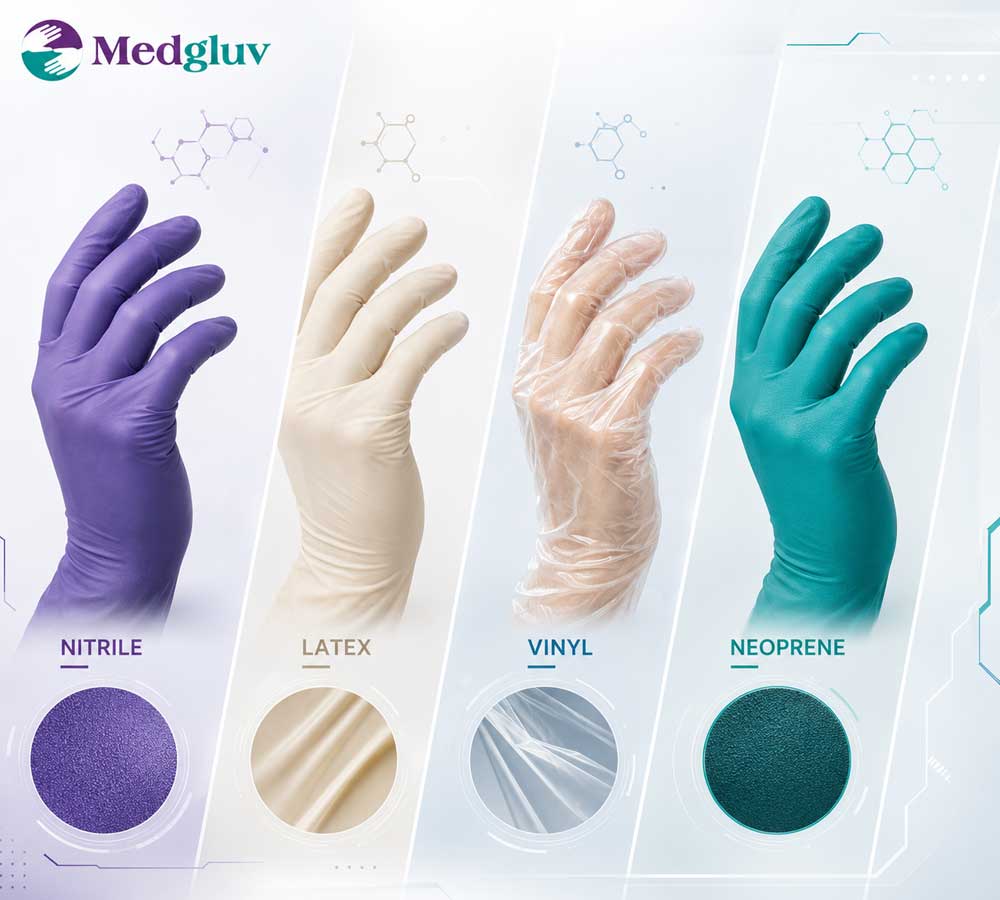
Nitrile vs. Latex vs. Vinyl vs. Neoprene
Glove material affects comfort, stretch, durability, fit, tactile feel, allergy considerations, and cost. The right material depends on the job and the people using the glove.
Nitrile gloves are latex-free and widely used for professional environments that need a strong, versatile disposable glove option.
Latex gloves are valued for comfort, elasticity, and tactile feel, but they may not be appropriate where latex sensitivity is a concern.
Vinyl gloves are often selected for short-duration, light-duty, cost-conscious tasks where frequent glove changes are expected.
Neoprene gloves provide a synthetic latex-free option in certain sterile glove categories and may be preferred based on fit, feel, and facility needs.
How Glove Materials Differ
Use this overview as a practical guide. Product specifications should always be reviewed before purchasing, especially when glove performance, sterility, chemical exposure, allergy concerns, or procedure requirements are important.
| Material | Common Strengths | Common Considerations | Related Collections |
|---|---|---|---|
| Nitrile | Latex-free, durable, versatile, widely used across healthcare, dental, lab, beauty, janitorial, and industrial environments. | Fit, thickness, texture, cuff length, and task requirements vary by product. |
Nitrile Exam Gloves Sterile Nitrile Exam Gloves Sterile Nitrile Surgical Gloves |
| Latex | Elastic, comfortable, close-fitting, and known for tactile sensitivity. | Contains natural rubber latex and may not be appropriate where latex allergies are a concern. |
Latex Exam Gloves Sterile Latex Exam Gloves |
| Vinyl | Latex-free, cost-conscious, and useful for short-duration, light-duty, frequent-change tasks. | Typically looser fitting and not usually selected for demanding high-dexterity or high-durability work. | Vinyl Exam Gloves |
| Neoprene | Latex-free synthetic option with a different fit and feel profile than nitrile or latex. | Used in specific sterile glove categories; review product specifications and intended use. | Sterile Neoprene Exam Gloves |
Non-Sterile vs. Sterile Gloves
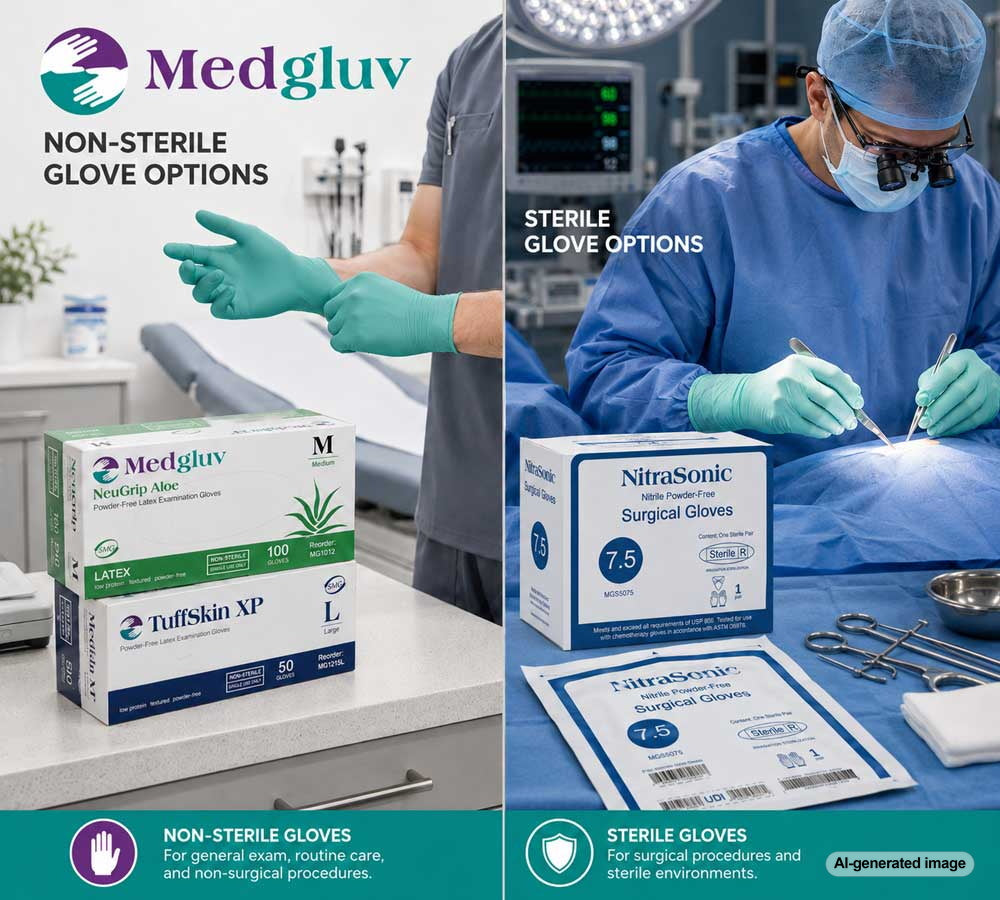
Sterility is one of the most important glove buying decisions. Non-sterile gloves are used for routine professional tasks where sterile protection is not required. Sterile gloves are used when sterile barrier protection is required based on the task, procedure, or facility protocol.
Buyers should not assume that all exam gloves are sterile, and they should not treat sterile exam gloves as surgical gloves unless the product is specifically labeled for surgical use.
Choose non-sterile gloves for routine exams, cleaning, handling, food service, beauty, janitorial, and general workplace tasks where sterility is not required.
Choose sterile exam gloves for appropriate clinical, dental, laboratory, or specialty care tasks requiring sterile barrier protection.
Choose surgical gloves only for surgical applications where the glove is specifically intended and labeled for surgical use.
Thickness, Texture, Cuff Length, and Sizing
Once you know the glove category and material, compare the details that affect daily use. These features can influence comfort, dexterity, grip, coverage, and purchasing consistency across a team.
Thickness
Glove thickness may affect feel, durability, flexibility, and comfort. Thicker is not automatically better; the right choice depends on the task.
Texture
Textured fingertips or fully textured gloves may help with grip when handling tools, instruments, bottles, packaging, or wet items.
Cuff Length
Standard cuffs work for many routine tasks, while extended cuffs may provide additional wrist or forearm coverage where appropriate.
Sizing
Consistent sizing helps teams work comfortably. Multi-user facilities should consider size range, staff preference, and reorder consistency.
Powder-Free Status
Powder-free gloves are commonly preferred in many professional environments. Review product details to confirm powder status before ordering.
Color
Color can support department organization, visual contrast, product preference, branding, or task separation depending on the workplace.
When to Choose Latex-Free Gloves
Latex-free gloves may be preferred in environments where staff, patients, clients, visitors, or customers may have latex sensitivity concerns. Nitrile, vinyl, and neoprene are latex-free glove materials, while latex gloves are made from natural rubber latex.
Buyers should consider latex-free options when standardizing glove supply across larger teams, public-facing environments, healthcare settings, dental offices, food handling operations, or any workplace where allergy concerns need to be considered.
Glove Collection Quick Links
Use these links to move directly into the glove category that fits your task, material preference, or facility protocol.
Find the Gloves That Fit Your Work
Whether you are buying for routine exams, sterile tasks, surgical use, food handling, cleaning, dental care, labs, beauty services, or high-volume institutional supply, MedGluv makes professional glove purchasing clearer and easier.